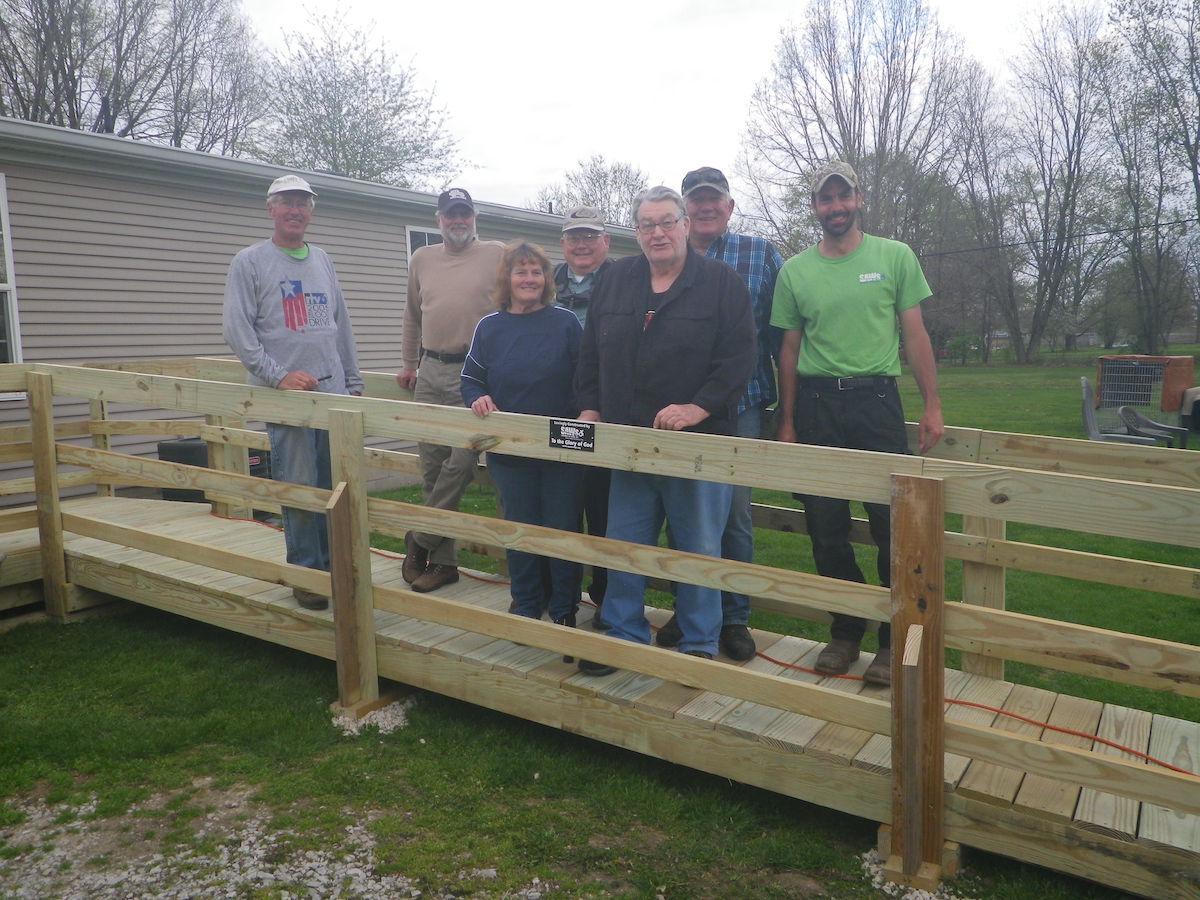
For many Indiana families, the biggest barrier is not inside the home. It is the front door.
A simple set of stairs can make it difficult or even dangerous for someone using a wheelchair, walker, or scooter to safely enter and leave their home. Unfortunately, many families cannot afford the cost of a wheelchair ramp on their own.
That is where SAWs (Servants at Work, Inc.) can help.
What Does SAWs Do?
SAWs is an Indiana nonprofit that builds exterior residential wheelchair ramps for low-income individuals and families living with disabilities. Since 2003, SAWs volunteers have built thousands of ramps across Indiana.
Our ramps help people safely:
Leave home for medical appointments
Return home from rehab or hospital stays
Age in place more safely
Gain independence and mobility
Who Qualifies for a SAWs Wheelchair Ramp?
SAWs serves Indiana residents who:
Have a mobility-related disability
Meet income guidelines
Own their home or have landlord approval
How Long Does It Take?
In many areas, wait times are currently shorter than usual due to increased volunteer capacity.
Our volunteer teams now pre-build many ramp sections before installation, allowing some ramps to be completed in just a few hours on-site.
How Are the Ramps Built?
Every SAWs ramp is built by trained volunteers and led by experienced project managers. Churches, schools, companies, and community groups all help make these builds possible.
No experience is needed for volunteers because SAWs provides the tools, materials, and leadership.
Apply for a Wheelchair Ramp in Indiana
If you or someone you know needs a safer way to get in and out of their home, SAWs may be able to help.
Accessibility is something many people don’t think about until they have to. For some, it’s invisible; doors open, paths are clear, and spaces are easy to navigate. But for others, accessibility determines where they can go, what they can do, and how independently they can live. It can be the difference between being included or left out.
When accessibility is missing, it’s not just an inconvenience, it becomes a barrier that limits opportunity, independence, and connection.
Barriers That Stand in the Way
Accessibility is about more than convenience. It creates the opportunity to work, build relationships, and fully participate in everyday life. When accessibility is done well, it often fades into the background. But when it’s absent, it becomes impossible to ignore. Barriers like stairs without ramps, narrow doorways, or spaces not designed with inclusion in mind can feel overwhelming, like Goliaths standing in the way of inclusion and belonging.
Facing the Giants
The story of David and Goliath reminds us of what it means to face something that feels bigger than us. Goliath was a giant, seemingly impossible to overcome. But David didn’t rely on size or strength, he relied on faith, courage, and the tools placed in his path.
In many ways, barriers to accessibility can feel like those same giants. They stand tall and send the message that participation is not possible. But just like David, those challenges can be overcome when people choose to act, advocate, and create change.
Accessibility Takes Action
Accessibility doesn’t happen by accident; it happens through intentional action. Individuals, communities, and organizations all play a role in removing barriers and creating inclusive spaces.
Organizations like Servants at Work, Inc. make meaningful impact by building ramps that provide more than access, they provide freedom, dignity, and the ability for individuals to engage with their communities in new ways. Each ramp built is a step toward removing a barrier that once felt impossible to overcome.
Why It Matters
Accessibility matters because people matter.
At some point, it impacts all of us, whether for ourselves, a family member, or someone in our community. When we begin to view accessibility as a shared responsibility rather than an afterthought, we create stronger, more inclusive communities. And when we choose to take action, we help others face and overcome their Goliaths, one barrier at a time.
About the Author
Brandon Scott is a storyteller, advocate, and accessibility champion who has never let limitations define what is possible. Born with a physical disability and using a power wheelchair, Brandon has spent his life challenging expectations and redefining ability.
Brandon competed as a high school wrestler before giving back as a wrestling coach, encouraging others to push beyond their limits. His passion for sports also led him to the NCAA, where he helped manage social media coverage for Division I Championships, capturing moments that connect and inspire fans across the country.
Today, Brandon uses his voice to advocate for inclusion, accessibility, and opportunity for people of all abilities. He was the featured speaker at SAWs’ 2026 , where he shared his personal story and encouraged others to see accessibility not as an afterthought, but as a pathway to freedom, dignity, and community. Above all, Brandon is a proud husband and father who believes there are no limits to what people can achieve when they choose possibility over limitation.
By Evan Drake, Mobility Expert and Founder of RestoreMobility.com
Ever feel like you’re a race car driver trapped in the world of pedestrians? Mobility scooters can be your ticket to freedom.
Picture this: zipping through aisles at the grocery store, breezing past walkers on the sidewalk. It feels exhilarating, right?
But hold up… Are mobility scooters all they’re cracked up to be?
We’ll explore that and more in this deep dive into their pros and cons. We’ll look under the hood at key features – things like adjustable steering wheels for comfort and safety options for control. Then we’ll put the pedal to the metal, with benefits such as increased independence and maneuverability.
But remember, every ride has its bumps – so we won’t shy away from drawbacks either. Limited battery life, anyone? Or transportation challenges? Buckle up! Hold on tight – it’s going to be quite a journey!
Trish and SAWs volunteers on her new ramp, built to fit a motorized chair.
Understanding Mobility Scooters and Their Role
Mobility scooters have a critical role in the lives of many individuals with limited mobility. They give freedom, independence, and an enhanced quality of life to those who might otherwise be confined.
The Growing Demand for Mobility Scooters
Mobility scooter usage has been increasing over recent years due to growing awareness about accessibility issues and an aging population’s needs. Research done by the National Institute on Aging shows that currently, 2.7 million US citizens utilize mobility scooters.
This trend isn’t just limited to America either;the global market value for mobility scooters is projected to reach $2.13 billion by 2025, growing at a CAGR of 7.8% from 2018 to 2025. These numbers indicate not only the vital role mobility scooters play in people’s lives but also their growing acceptance worldwide.
Key Features of Mobility Scooters
Mobility scooters are equipped with features that prioritize comfort and customization, enhancing the overall user experience. For instance, adjustable steering wheels and larger seats not only cater to a range of body types but also make sure rides are as comfortable as possible.
Safety Features in Mobility Scooters
Safety is paramount when it comes to mobility devices like scooters. To this end, manufacturers have incorporated various safety features into their designs.
One such feature is joystick control. Joystick controls offer precise maneuverability for users by allowing them to control direction and speed easily. This intuitive control system lets users navigate tight corners or crowded spaces without worry.
Besides joystick controls, reclining options add another layer of safety while promoting comfort at the same time. By letting you adjust your seat position based on your personal needs or preferences, these options can help prevent back pain or discomfort during extended use. You can find some incredible options at RestoreMobility.com because they attach extra importance to products with higher and better safety features.
Finding Your Perfect Match: Customizable Steering Wheels and Larger Seats
Adjustable steering wheels and larger seats? Yes, please. These features mean you can tweak your ride to fit like a glove. That’s right; these scooters are all about making life more comfortable.
Milton using his power scooter to help SAWs build a ramp at his home.
Advantages of Mobility Scooters
Mobility scooters offer a lifeline to those who need help getting around, transforming every day into an accessible adventure. But what makes them so advantageous?
Increased Independence with Mobility Scooters
First off, mobility scooters give users the freedom they crave. They let people keep up with their daily activities without relying on others.
No more missing out on social events or struggling through errands – mobility scooters provide that independence. Plus, this newfound autonomy isn’t just practical; it’s also great for mental health, fostering self-confidence and happiness in users.
Maneuverability of Mobility Scooters
Apart from giving you back your freedom, these little powerhouses are quite nimble too. Especially when we’re talking about 3-wheel models.
Their compact design and smaller turning radius make navigating tight spaces a breeze. Whether indoors or outdoors, these agile machines can handle corners like professional race car drivers.
Specialized Ramps for Mobility Scooters:
Mobility scooters, with their distinct size and weight, demand specialized infrastructure. Not every ramp can handle these specifications. This is where SAWs Ramps shines. We understand the unique requirements of mobility scooter users. Our ramps are engineered with precision, ensuring not only accessibility but also safety and durability. With SAWs Ramps, scooter users can navigate with confidence, knowing they’re supported by a design tailored just for them.
Drawbacks of Mobility Scooters
As with any product, mobility scooters have their own set of drawbacks. Despite offering independence and maneuverability, these machines are not without a few limitations.
Limited Battery Life
A common issue faced by users is the limited battery life of mobility scooters. On average, most models provide between 15 and 20 miles per charge, depending on various factors like weight, load and terrain. Consumer Reports mentions that understanding your daily mileage needs can help you choose a model with adequate battery capacity.
The fact remains, though; there will be days when your scooter’s juice runs out quicker than anticipated. For instance, colder weather conditions can significantly reduce the range of batteries in general – including those in mobility scooters.
Transportation Challenges
Moving onto another concern: transportation challenges Due to their bulky design and considerable weight (often exceeding 100 pounds), transporting them may require extra planning or even additional equipment, such as ramps or vehicle lifts. Mobility Scooter Direct suggests that lightweight folding models might offer an easier solution for frequent travelers, but this isn’t always feasible for everyone due to differing user requirements.
Beyond personal vehicles, using public transport systems also presents its share of obstacles because accessibility varies widely across different regions and services. “Can I bring my scooter onboard?”, becomes a question often asked yet seldom answered definitively.
Cost Considerations
Last but not least, cost is a significant factor to consider. Prices for mobility scooters can range from hundreds to thousands of dollars based on their features and specifications. Plus, ongoing costs such as battery replacements and maintenance work also add up over time. AARP’s guide provides useful insights into the different costs involved in owning a mobility scooter.
Many health insurance plans do not cover the purchase price of a mobility scooter, thus making it an out-of-pocket expense for many.
FAQs about Pros and Cons of Mobility Scooters
What are the disadvantages of mobility scooters?
Mobility scooters can have limited battery life, be hard to transport due to their size and weight, and might not handle rough terrain well.
Are mobility scooters a good idea?
Absolutely. Mobility scooters enhance independence for people with reduced mobility by helping them maneuver both indoors and outdoors more easily.
What is the average life of a mobility scooter?
The lifespan of a typical mobility scooter ranges from 5-10 years, depending on usage, maintenance, model quality, and battery health.
How often will Medicare pay for a mobility scooter?
If you qualify medically, Medicare Part B may cover up to 80% of the cost every five years for durable medical equipment like mobility scooters.
Conclusion
Zooming around on mobility scooters can be a game changer. They give you the independence to maneuver both indoors and outdoors, helping maintain social connections.
You’ve got comfort with adjustable steering wheels and larger seats. And let’s not forget about safety options like joystick controls. But don’t overlook potential bumps in your ride, such as limited battery life or transportation challenges.
Weighing up these pros and cons of mobility scooters is crucial before hitting that gas pedal! If you’re ready to embrace an independent lifestyle while staying mindful of the drawbacks, then buckle up. It’s going to be quite a ride!
When it comes to accessibility, a critical factor to consider is the slope of a wheelchair ramp. At Servants at Work (SAWs), we are dedicated to building ramps that provide safe and easy access for individuals with mobility challenges. In this blog post, we’ll explore the importance of the proper ramp slope and how SAWs ramps are designed to make a difference.
The Right Slope for a Wheelchair Ramp
The slope, or incline, of a wheelchair ramp plays a pivotal role in ensuring safe and efficient access. Ramps that are too steep can be challenging to navigate for individuals using wheelchairs, walkers, or those with limited mobility. So, what’s the proper slope for a wheelchair ramp?
According to the Americans with Disabilities Act (ADA) guidelines, the recommended maximum slope for a wheelchair ramp is 1:12, which means that for every inch of vertical rise, there should be at least 12 inches of ramp length. This slope provides a gentle incline that allows for easy and safe ascent and descent.
Why 1:12?
The 1:12 slope is based on extensive research and is considered ideal for several reasons:
Safety: A gentler slope is safer for individuals using wheelchairs or mobility aids, as it reduces the risk of tipping over backward when ascending and provides better control when descending.
Ease of Use: A 1:12 slope is comfortable for users, ensuring a smooth and effortless transition between different levels or surfaces.
Compliance: Following ADA guidelines ensures compliance with accessibility regulations, reducing liability and ensuring that your ramp meets legal standards.
Universal Design: This slope also accommodates a wide range of mobility devices, making it versatile and user-friendly.
Calculating the Length of a Ramp:
To calculate the necessary length for your wheelchair ramp, you can use a simple formula:
Ramp Length = Vertical Rise ÷ Slope (1:12)
For example, if you have a vertical rise of 24 inches, you would need a ramp that is 24 feet long (24 ÷ 12 = 2).
Considerations:
While the ADA recommends a 1:12 slope, there are situations where slight deviations may be necessary due to space constraints. In such cases, it’s crucial to consult with accessibility experts to ensure the safety and usability of the ramp. Additionally, ramps should include handrails for added safety and accessibility.
Why SAWs Ramps Excel
At SAWs, we understand the significance of adhering to these guidelines. Our volunteers and carpenters meticulously design and build ramps that meet, and often exceed, ADA standards. Here’s why SAWs ramps excel:
Accessibility: Our ramps are carefully constructed to provide the proper slope, ensuring anyone can comfortably access their homes and community.
Safety: Safety is paramount. We use quality materials and craftsmanship to create sturdy ramps that offer stability and peace of mind.
Community Impact: SAWs ramps not only enhance individual lives but also foster a more inclusive and supportive community.
How You Can Get Involved
Now, here’s where you come in! If you’re passionate about making a difference in your community, consider volunteering with SAWs. We’re always in need of dedicated individuals who share our commitment to accessibility.
Volunteer with Us – Join our team of volunteers and help us build ramps that transform lives. Register here!
If you or someone you know requires a wheelchair ramp for better accessibility, don’t hesitate to reach out. SAWs is here to help.
Apply for a Ramp – If you or a loved one needs a ramp, submit an application today, and we’ll work together to provide the access you deserve. Apply here.
At Servants at Work, we believe that everyone should have the opportunity to live their lives to the fullest. With your support and involvement, we can continue to create a more accessible and inclusive world, one ramp at a time. Join us in this meaningful journey today!
Freedom Chairs is a non-profit that focuses on providing mobility equipment to those who can’t obtain it through standard channels. Some of the most common scenarios in which Freedom Chairs can help are:
An unexpected condition causes a rapid need for equipment and the insurance process has been started, but it will take a significant amount of time
Situations where people don’t have insurance
Equipment has been damaged and the timespan for repair is months
Short-term conditions such as surgeries
If you need a chair for these or other appropriate reasons, you can reach out via the contact form available on Freedom Chairs Website; www.freedomchairs.org and they will follow up to better understand your situation and determine how they may be able to help.
At Freedom Chairs, they are passionate about giving wheelchairs a second home and helping people in the process. With your help, they can refurbish gently used wheelchairs and provide them to individuals in need. However, they do have some requirements for donations to ensure that the wheelchairs will be able to have a second home.
Aaron, a Freedom Chairs client
Freedom Chairs can accept custom power wheelchairs (often called group 3 chairs) that are less than 5 years old and in working order, although good batteries are appreciated, but not required. They also accept generic power wheelchairs (often called group 1 or 2) that are a bit older if they are in good condition. They accept scooters of most ages in good condition and nice manual wheelchairs. Please note that they cannot accept wheelchairs that are damaged or in poor condition, as it can often be very difficult to obtain replacement parts other than wheels, motor brushes, hardware, or batteries without them costing more than the value of the chair.
If Freedom Chairs are unable to accept your wheelchair, there are other options available to you. Some metal recycling centers will accept wheelchairs for recycling. You can also consider posting your wheelchair for free on online marketplaces such as Facebook Marketplace or Craigslist. Some individuals in your community may have the space to store or repair chairs, or you might even find a local high school that will use the motors and frame for a robot platform!
We understand that parting with a wheelchair can be emotional, especially if it was used by a loved one. However, donating your chair to Freedom Chairs or exploring other options for donation or disposal can help make a significant difference in the life of someone in need or at a minimum, reduce the negative environmental impact of disposal if the chair is past its useful service life.